Treats, Tricks, and a Time Change: Keeping Your Dog Safe This Halloween Weekend
Oct 26, 2026 ·
This year, your pup is in for a spooky double feature. Halloween falls on Saturday, October 31, and daylight-saving time ends at 2 a.m. on Sunday, November 1, when clocks fall back an hour.
That means one weekend packs in candy bowls, costumes, a doorbell that won’t quit, and then a sudden shift to dark evening walks and a scrambled daily schedule. None of it has to be a problem. A little planning keeps your dog safe, calm, and still part of the fun.
Keep the candy bowl out of reach
Halloween candy is the biggest hazard of the weekend, and dogs are very good at finding it. The main culprits:
- Chocolate. It contains theobromine, which dogs process slowly. Dark and baking chocolate are the most dangerous, but milk chocolate can still cause vomiting, a racing heart, or tremors.
- Xylitol. This sweetener shows up in sugar-free gum, mints, and some candies and peanut butters. Even a small amount can drop a dog’s blood sugar fast and damage the liver.
- Raisins. Those little boxes some neighbors hand out can cause kidney failure in dogs, and there’s no known “safe” amount.
- Wrappers and sticks. Foil, cellophane, and lollipop sticks can cause choking or intestinal blockages.
Store the stash on a high shelf or in a closed cabinet, and have kids empty their buckets somewhere the dog can’t follow. If you want your dog to join the celebration, keep a few dog-safe treats by the door.
Costumes and decorations
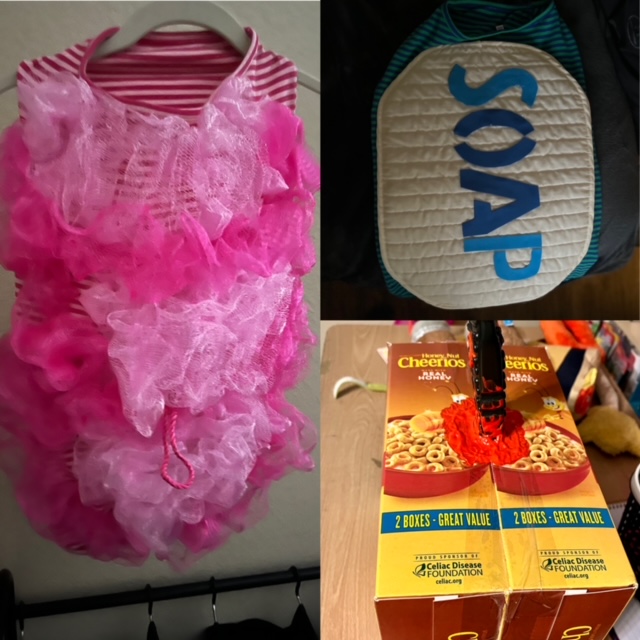
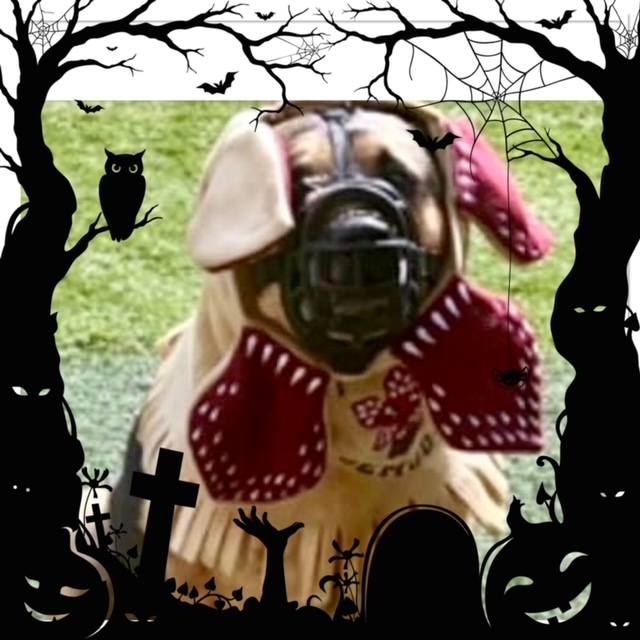
A costume should be fun for your dog, not just for the photos. Try it on a few days early and watch for flattened ears, a tucked tail, freezing, or constant scratching. Any of those means your dog would rather skip it, and a festive bandana works just as well.
If your dog is happy in costume, check that it:
- Doesn’t cover the eyes, ears, nose, or mouth
- Leaves room to breathe, pant, and go to the bathroom
- Has no small buttons, bells, or tassels that could be chewed off and swallowed
- Is never left on while your dog is unsupervised
Decorations deserve a once-over too. Keep jack-o’-lanterns with real candles out of tail range, or switch to battery-powered lights. Tuck away cords from light strings and animated props. Glow sticks aren’t usually toxic, but the liquid inside tastes awful and can cause heavy drooling and gagging. Fake cobwebs can tangle around paws or get swallowed.
Trick-or-treat night: doorbells and open doors
For many dogs, Halloween night is hours of strangers in masks ringing the bell. That’s stressful even for friendly dogs, and every open door is a chance to bolt into a dark street.
- Set up a quiet room. Put your dog in a back bedroom with a bed, water, a chew or food puzzle, and some background noise like a fan or TV.
- Use a barrier. If your dog stays in the main living area, a baby gate or crate keeps them away from the front door.
- Skip the bell. Sit outside with the candy bowl or leave a sign asking visitors to knock softly.
- Walk early. Take your dog out before sunset, before the costumed crowds arrive.
- Leave them home. Unless your dog genuinely loves crowds, trick-or-treating is more fun without them.
Treat the four-legged trick-or-treaters, too. Plenty of costumed pups make the rounds with their families. Keep a separate bowl of dog-safe goodies by the door, like single-ingredient biscuits or small training treats. Make it easy to tell apart from the candy bowl and ask the owner before you hand one over in case of allergies or a sensitive stomach.
Make sure ID is current before the weekend. Check that your dog’s collar tag is legible and that their microchip is registered with your current phone number. If your dog does slip out, that tag and chip are the fastest way home.
Darker walks after the clocks fall back
On Monday, November 2, your usual after-work walk will suddenly happen in the dark. Drivers are adjusting too, and the first weeks after the time change are a risky time for anyone walking near traffic.
- Be seen. Light your dog up from nose to tail. LED collars, clip-on harness lights, and light-up leashes make your dog visible to drivers from far away, even on a dark-coated dog. A blinking mode grabs attention better than a steady glow. Choose rechargeable or waterproof options, check the batteries before each walk, and wear something bright or reflective yourself.
- Carry a light. A headlamp or small flashlight keeps your hands free and helps you spot hazards on the ground.
- Stay short and close. Use a standard leash instead of a retractable one so your dog stays near you.
- Watch the ground. Leftover candy wrappers and smashed pumpkins line sidewalks for days after Halloween, so keep an eye on what your dog sniffs.
- Pick familiar routes. Well-lit streets and sidewalks beat shortcuts across dark lots or roads without shoulders.
If you live in Arizona or Hawaii, your clocks won’t change. Your sunsets will still creep earlier through the fall, though, so the visibility tips still apply.
Easing your dog into the new schedule
Your dog doesn’t read clocks, but their stomach does. After the time change, a 6 p.m. dinner will feel like 7 p.m. to your dog, and the morning walk will come an hour “late.”
The easiest fix is to shift gradually. Starting a few days before November 1, move meals and walks 10 to 15 minutes later each day. By Sunday, your dog will already be on the new time. If you missed the head start, make the shift over the following week instead.
This matters most for dogs on timed medications like insulin, and for older dogs and puppies who need regular bathroom breaks. If your dog takes medication on a strict schedule, ask your vet how to adjust dosing times. After a hectic Halloween night, keeping the rest of the week calm and predictable will help your dog settle back in.
Your Halloween weekend checklist
- ☐ Store candy up high and remind kids to keep buckets away from the dog
- ☐ Test any costume a few days early
- ☐ Swap real candles for battery-powered lights
- ☐ Set up a quiet room or gate for trick-or-treat night
- ☐ Check ID tags and update microchip contact info
- ☐ Get a reflective collar or leash and a flashlight for evening walks
- ☐ Start shifting meals and walks 10 to 15 minutes a day before November 1
If your dog eats something it shouldn’t, call your vet or a 24-hour emergency clinic right away, even if your dog seems fine. You can also reach the ASPCA Animal Poison Control Center at (888) 426-4435 or the Pet Poison Helpline at (855) 764-7661. Both are available around the clock, and a consultation fee may apply. Have the wrapper or package handy so you can tell them exactly what and how much your dog ate.
With a little prep, your dog can enjoy the season right along with you, minus the scares.
Have a Barktastic week. Remember to give your furry family members lots of attention you are their entire world. ~Charley